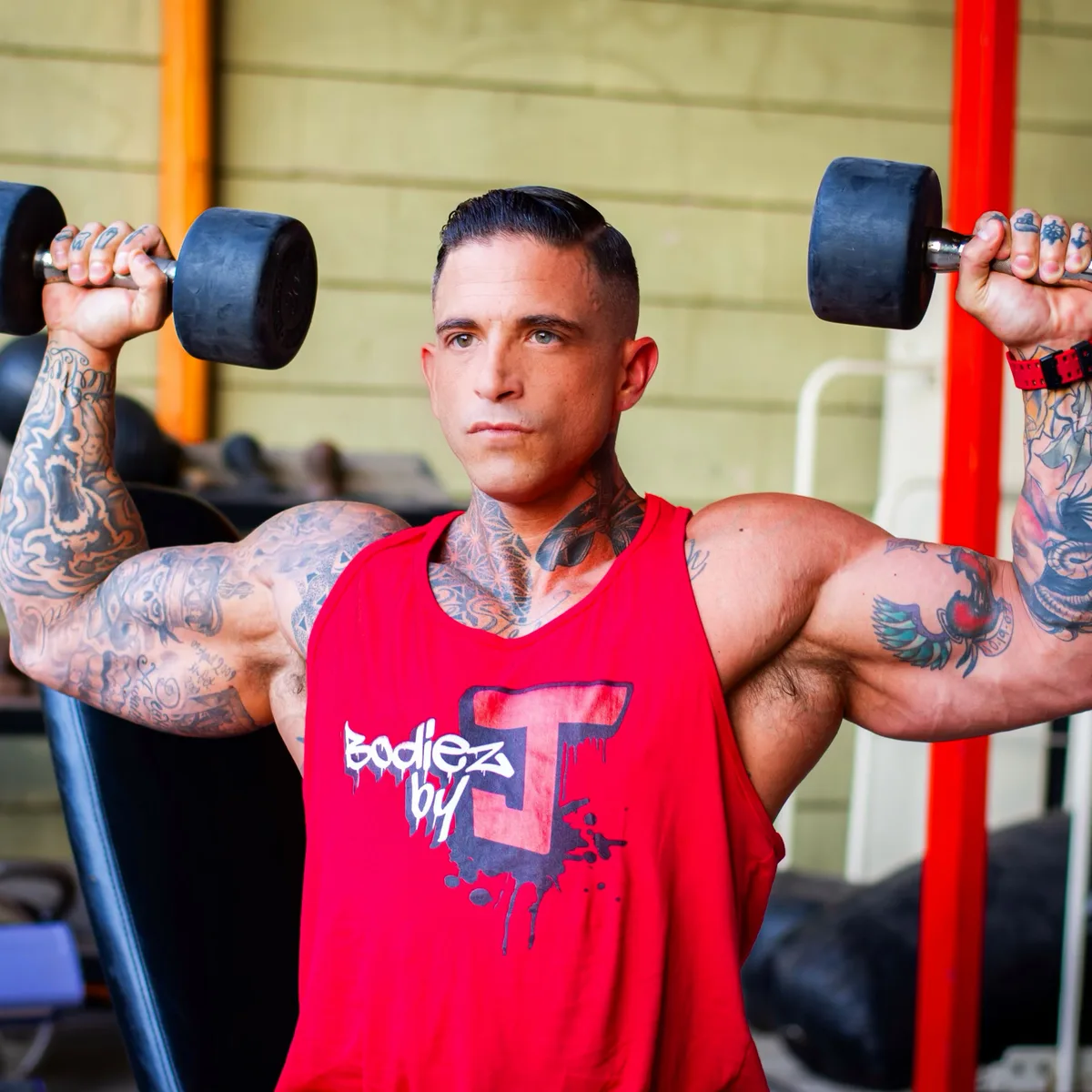
If you served, worked a shift, or spent twenty years putting everyone else's readiness ahead of your own, you already know what good condition feels like. You had it once. Then the deployments ended, the job got heavier, the knees and the shoulders started filing complaints, and somewhere in there the man in the mirror stopped looking like the one you remember.
I'm Justin — eight years a U.S. Marine, and a coach since 2015. I work with men over 40 who've got service years, a demanding job, or both, and I'll tell you the same thing I tell them on the first call: getting back in shape after 40 is absolutely doable, but not with a program written for a 25-year-old who has nothing to do but train and recover. You need a plan built for the body you've actually got — miles on it and all. This is that plan.
What actually changes after 40 (the honest version)
You don't need fear, you need facts. A few things genuinely shift in your 40s and beyond. None of them are a death sentence for your physique — but ignoring them is why most "just train harder" attempts fail.
Muscle gets harder to keep
Adults gradually lose muscle mass and strength with age — a process called sarcopenia. It's slow through your 40s and 50s and speeds up later in life, and it moves faster when nothing is telling the body to hold that muscle. This matters for far more than looks: muscle is what protects your joints, keeps your back out of trouble, and keeps you independent decades from now. The single strongest signal you can send your body to keep muscle is resistance training. Not cardio. Lifting.
Recovery slows down
The work that used to take two days to bounce back from can take three or four now. That's not weakness; it's physiology. The men who get hurt after 40 are usually the ones who train like they're still 22 — max effort every session, no deload, no sleep. The fix isn't training less hard. It's training hard and recovering on purpose.
Hormones drift
Testosterone in men declines gradually with age — on the order of 1% a year from around your 30s and 40s. It's a slow slope, not a cliff. Losing excess body fat, sleeping well, training, and managing stress all help protect healthy testosterone — but they're not a treatment for clinically low T. If you suspect something clinical, that's a conversation for your physician and a blood panel, not a supplement ad.
The body composition shift
Many men notice fat settling around the middle in their 40s even when the scale barely moves, and old injuries from service or the job — knees, shoulders, lower backs — start dictating what you can and can't do. Both are workable. You train around the wear, and you rebuild the muscle that keeps the metabolism and the joints honest.
The mindset that actually works
The hardest adjustment isn't physical. It's deciding to train the body you have instead of mourning the one you had. The man who gets his condition back at 47 is not the one who finds a magic program. He's the one who shows up to a good-enough plan for months without drama.
In the service you didn't wait to feel motivated — you had a standard and you met it. Same idea here. Motivation is weather. The plan is the standard. You don't need to be fired up; you need to not negotiate with yourself three times a week.
How to train after 40: strength first
This is a general framework, not a prescription for your body. If you've been inactive a long time, carry a diagnosed condition, or have an injury, clear it with your physician or physical therapist first — then this is how I'd build it.
Three full-body days a week
For most men over 40 juggling a real schedule, three full-body sessions a week beats a six-day bodybuilder split every time. It's enough to drive progress, forgiving when life eats a day, and it spreads the joint load out. Each session, take one movement from most of these patterns:
- Squat: goblet squat, box squat, leg press, split squat
- Hinge: dumbbell Romanian deadlift, hip thrust, kettlebell deadlift, back extension
- Push: dumbbell bench or floor press, incline press, landmine press (shoulder-friendly)
- Pull: cable or dumbbell row, lat pulldown, chest-supported row, assisted pull-up
- Carry / core: farmer's carry, suitcase carry, dead bug, plank
Lift heavy enough to matter — and progress it
The most common mistake I see in men coming back is lifting weights that are too light for too long because they're (reasonably) worried about getting hurt. The answer isn't to go light forever; it's to pick loads you can move for about 6–12 clean reps where the last rep or two are genuinely hard, and stop with a rep left in the tank. When the top of the range feels solid with good form, add a little weight. That slow, steady climb — progressive overload — is what actually drives results. Not sure where you stand? The 1RM Calculator gives you a reference from any set you've done.
Warm up like a professional, not a kid
Five to ten minutes of easy movement plus a couple of light build-up sets before your working weight is not optional at our age — it's the cheapest injury insurance there is. Muscle soreness is normal. Sharp or joint pain is a signal to change the exercise, not grind through it. There is almost always a variation that lets you train the pattern without lighting up the bad joint.
Training around old injuries
This is the part generic programs ignore and the part that matters most to a 40-plus veteran or first responder. The principle is simple: work around pain, don't push through it. A cranky shoulder usually tolerates neutral-grip and landmine presses when a straight barbell bench hurts. A bad lower back often does better with hip thrusts, trap-bar or elevated deadlifts, and hard-style planks than with conventional deadlifts and loaded rotation. Bad knees frequently prefer box squats, leg press in a pain-free range, and split squats over deep barbell back squats.
What I will not do, and what you should be suspicious of anyone online doing, is diagnose your injury or hand you "corrective exercises" to fix it over the internet. That's your doctor's and physical therapist's lane. My job is to build a strong program around what they clear you for. Done right, you keep training the whole time — which is usually better for a stiff joint than sitting still.
Conditioning and your heart
Strength is the foundation, but after 40 your heart deserves real attention too. You don't need to become a runner. The highest-return approach for most of my guys is mostly easy aerobic work — brisk walking, the bike, rucking if your joints allow — with one or two harder efforts a week. Daily walking alone, if you're not doing it, is one of the most underrated changes a busy 40-plus man can make: it burns meaningful energy, helps recovery, and asks nothing of your joints.
Eating to rebuild (not just shrink)
Training gives the signal. Food supplies the materials. Two things matter most after 40:
Protein, and more of it than you think
Older adults generally need more protein than the bare-minimum guidelines to maintain and build muscle, and most men I coach are eating well under what they assume. A practical target many coaches and researchers use is roughly 1.6–2.2 grams of protein per kilogram of body weight per day (about 0.7–1 gram per pound) when you're training and trying to hold or add muscle. Anchor every meal with a real serving of protein first. The Macro Calculator gives you a sensible starting target, and if you'd rather not weigh food, Meal Lens estimates a plate from a photo.
A moderate deficit, not a crash
If fat loss is the goal, a moderate deficit while you lift and eat enough protein lets you lose fat while protecting muscle. Crash diets do the opposite — they strip muscle along with fat, tank your training, and rebound. Slower is faster here. And the honest one most men don't want to hear: alcohol is usually the biggest hidden lever in a 40-plus man's nutrition. You don't have to quit; you do have to count it.
Recovery is a training variable, not a reward
Sleep is where the body actually adapts to training, and it's the first thing to go for shift workers, parents, and anyone carrying stress. If you work rotating shifts — a lot of law enforcement and first responders do — protecting a consistent sleep window around your shift matters more than any supplement. Add a deload (a lighter week) every 4–8 weeks, keep stress in check, and treat recovery as part of the program, not a day off from it.
Fitting it around the job and the family
You will not out-train a schedule that doesn't fit your life, so don't build one you can't keep. Three 45-minute sessions you actually do beat five 90-minute sessions you quit in three weeks. Travel, deployments, and back-to-back shifts are the norm, not the exception — a good program bends around them with a two-day minimum and a home or hotel-room fallback, instead of breaking the moment real life shows up. Consistency over months is the whole game.
How long it takes, and how to measure it
Honest timeline: most men who train and eat with intention see real changes in how they look, move, and feel within 8–12 weeks, and a clearly different body in 6–12 months — though that varies with your starting point, genetics, and how consistent you are. Anyone promising a fixed, faster result is selling something. And don't judge it by the bathroom scale alone — muscle and fat change at different rates, so track strength numbers, how your clothes fit, waist measurement, progress photos, and energy. The Body-Fat Calculator and a monthly photo tell you far more than daily weigh-ins.
The mistakes I see most
- Training like you're 22. Max effort every day, no warm-up, no deload. It works until it very suddenly doesn't.
- Program-hopping. Results come from repeating the same lifts and slowly beating your numbers, not a new routine every week.
- Under-eating protein while over-doing cardio. That's the recipe for getting smaller and softer instead of leaner and stronger.
- Pushing through joint pain. Swap the exercise. There's always another way to train the pattern.
- Going it alone when you keep stalling. If you've started and stopped four times, the missing piece usually isn't information — it's a plan built for you and someone holding the standard.
Who this is for
I build programs for a specific kind of man: veterans and prior military, law enforcement and first responders, and men over 40 who are done starting over and want a plan that respects the job, the family, and the mileage. If that's you, that's exactly who I coach.
The bottom line
You can get back in shape after 40. Not the 25-year-old version — a better one, built on strength you'll actually keep. Lift three days a week with weights that challenge you, train around your injuries instead of through them, eat enough protein, walk daily, sleep like it matters, and give it months instead of weeks. Do that and the man in the mirror starts looking familiar again.
If you'd rather not guess — if you want a program built around your body, your schedule, your old injuries, and your goals, with someone checking your progress every week — that's what I do. See real client results, or book a free call and let's talk it through. No pitch, straight answers.
Want this built for you, around your schedule and your body? That’s exactly what my coaching for men over 40 is — a custom plan with weekly check-ins by call or video. See real client results or explore coaching.
This article is general fitness education, not medical advice. Consult your physician before starting any new exercise or nutrition program.
FAQ
Can you really get back in shape after 40?
Yes. Your body changes after 40 — muscle is harder to keep, recovery is slower, and old injuries matter more — but all of that is workable. With strength training 2-3 times a week, enough protein, daily walking, real sleep, and consistency over months, most men over 40 can get leaner, stronger, and move better. It takes a plan built for your body, not a program written for a 25-year-old.
How should a man over 40 train if he has old injuries?
Work around pain, never through it. Most cranky joints tolerate a variation that trains the same movement without hurting — neutral-grip or landmine presses for bad shoulders, hip thrusts and trap-bar pulls for bad backs, box squats and split squats for bad knees. Clear any injury with your physician or physical therapist first, then build a strong program around what they clear you for. A good coach programs around the injury rather than ignoring it.
How much protein does a man over 40 need to build muscle?
Older adults generally need more protein than the minimum guidelines to maintain and build muscle. A common practical target when training is roughly 1.6-2.2 grams per kilogram of body weight per day (about 0.7-1 gram per pound). Anchor every meal with a real serving of protein. This is general guidance, not a medical prescription — adjust for any kidney or health conditions with your doctor.
How long does it take to get back in shape after 40?
Most men who train and eat with intention see real changes in how they look and feel within 8-12 weeks, and a clearly different body in 6-12 months, though this varies with your starting point, genetics, and consistency. Anyone promising a fixed, faster result is overpromising. Judge progress by strength, measurements, photos, and energy rather than the scale alone, since muscle and fat change at different rates.
Free tools: 1RM calculator · macro calculator · body-fat calculator
■ Free — no card, no catch
Want A Head Start?
Grab the free 5-Day Workout & Meal Plan Sampler — five real training days, a full meal plan, and a grocery list. The same style of programming my clients run.
Get The Free Guide