Every fat-loss article eventually arrives at the same instruction: weigh your food. Buy a digital scale, put the bowl on it, tare it, add the chicken, write down 174 grams. Do that for every component of every meal, every day, and yes — you will know your intake with real precision.
You will also quit. I have watched it happen for a decade. The client who weighs everything is impressively accurate for about eleven days, and then stops tracking altogether — usually on the first evening he eats somewhere that isn't his own kitchen. The scale isn't wrong. It just has a compliance problem, and a nutrition method you abandon in week two is worth less than a rougher one you keep for a year.
So here is the version that survives contact with real life. Learn to estimate portions with your hand, calibrate that estimate once so you know your own error, and use a photo for the plates you didn't cook. That combination gets most people close enough to make steady, visible progress without ever owning a food scale.
Photograph A Meal — Get Macros Free →Why weighing everything works and still fails
There are two variables in nutrition tracking: how accurate your numbers are, and how many days you actually produce them. Weighing maximises the first and quietly destroys the second. Most people optimise the wrong one because accuracy is the part that feels scientific.
Run the arithmetic on it. A method that's roughly right on six days a week gives you six data points and six controlled days. A method that's exactly right on the four days you're at home and produces nothing at all on the other three gives you a broken week and, more importantly, three days where you weren't paying attention to portions either. The tracking isn't just measurement — it's the thing that makes you notice the second helping.
The scale does genuinely earn its place in a few situations, and I'll be straight about them: stage prep, the last four or five kilos when someone is already lean, or a stubborn plateau where we need to rule out estimation drift before changing the plan. If you're carrying twenty kilos you'd like to lose, you are nowhere near needing that resolution. You need consistency, and consistency comes from a method that works in a restaurant.
The hand-portion method: you already carry the measuring cups
The hand method is the most useful tool in practical nutrition coaching, and its cleverness is that it scales itself. A 195lb man has bigger hands than a 130lb woman and also needs more food. Using your own hand as the unit means the portion size auto-adjusts to the body it's feeding, with no calculation and nothing to carry.
The four measures
- Palm = protein. One portion is the size and thickness of your palm, fingers excluded — roughly 20 to 30 grams of protein. Chicken, beef, fish, tofu, a large scoop of Greek yogurt, a couple of eggs plus a few whites.
- Fist = vegetables. One clenched fist is one portion. Broccoli, salad, peppers, stir-fried greens. This is the portion nobody over-eats and almost everybody under-eats.
- Cupped hand = carbohydrate. Measured cooked, not dry: rice, pasta, potato, oats, bread, fruit. One cupped handful is one portion.
- Thumb = fat. Your whole thumb, tip to base. Oil, butter, cheese, nuts, nut butter, avocado. This is the measure people get wrong by the widest margin, and it's the most calorie-dense of the four.
Building a plate you don't have to think about
A reasonable default for most men is two palms of protein, two fists of vegetables, two cupped hands of carbohydrate and two thumbs of fat per meal, across three or four meals. For most women, halve it: one of each. That is the starting shape, not a prescription — it's a place to begin so you have something to adjust from.
When you need to adjust, the order matters. Protein is the slot you hold fixed. Fat loss stalled? Remove a cupped hand from the two meals furthest from training, and a thumb from wherever the fat is most cosmetic. Training hard and feeling flat? Add cupped hands back on the days you lift. You will find yourself changing two numbers, not four, which is the entire point.
Where hand portions drift, and the one week that fixes it
Let me be honest about the weakness, because pretending an estimate is a measurement is how people end up confused eight weeks in. Hand portions are estimates and they will be off. Worse, the error tends to run one direction: almost everyone under-counts fat, and almost everyone's idea of a cupped hand of rice grows over a month.
Here's the thing that makes it work anyway — a consistent error is nearly harmless. If your estimate reads 10% low every single day, the absolute number is wrong but the trend is perfectly readable, and the trend is what you actually coach off. You change the plan based on what the scale and the mirror do over three weeks, not on whether Tuesday said 2,180 or 2,400.
Which leads to the one genuinely worthwhile use of a kitchen scale: a single calibration week. Borrow one, weigh only your six or seven staple foods once each, and look at what your palm and your cupped hand really are. Most people discover their palm of chicken is about 150 grams and their "one thumb" of olive oil is closer to two. After that week you can estimate for the rest of your life with a known, corrected error. Calibrate once, estimate forever.
The plates you can't measure: photograph them instead
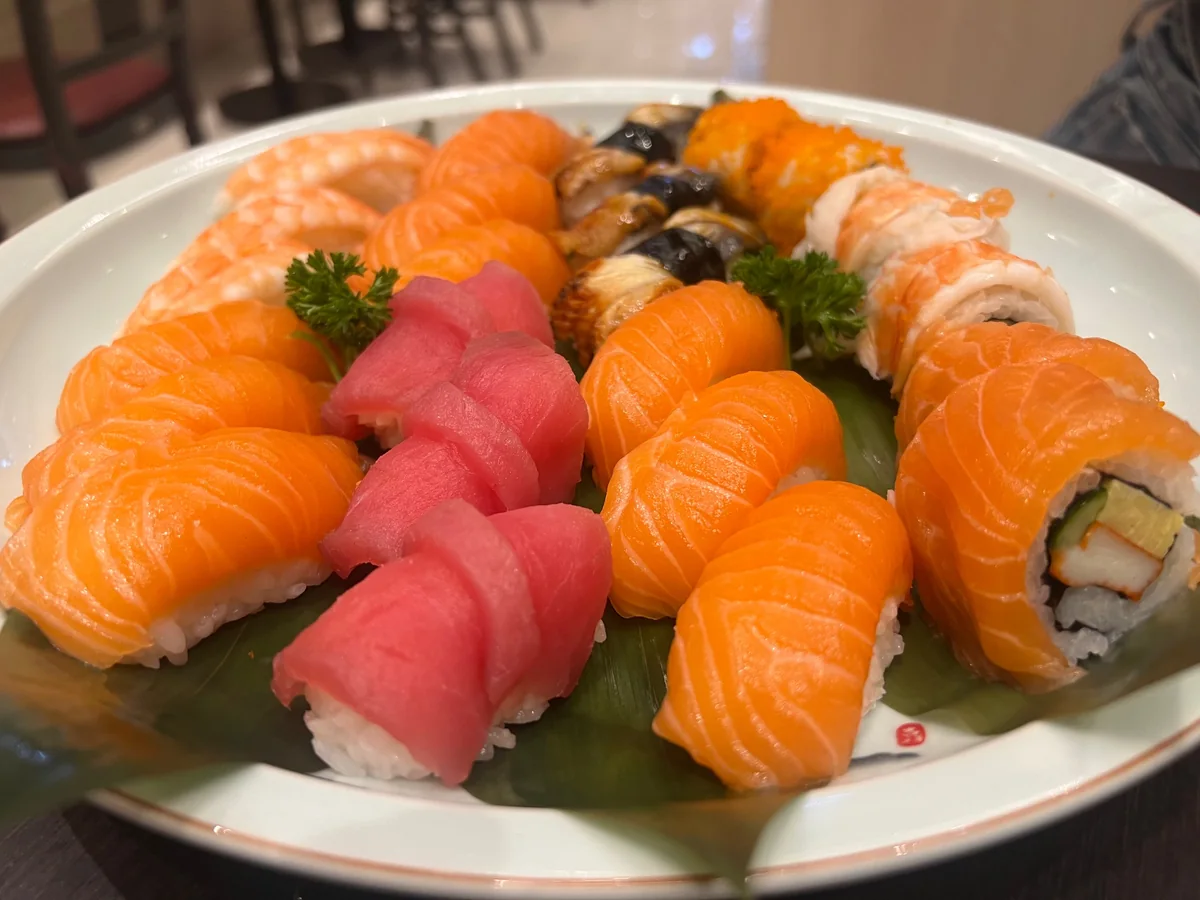
Hands handle everything you cook. They don't help much with the meals that actually derail people: the shared platter at dinner, a hotel breakfast buffet, street food from a stall with no menu in English, or someone else's cooking where asking what's in it would be rude. These are the meals where most people simply stop tracking for the day.
That's the gap Meal Lens covers. Take one photo of the plate in front of you and it returns an estimate of calories and macros for what it can see. It's free, there's no signup or app to install, and the photo is analysed and then discarded rather than stored. Ten seconds at the table, and the day stays trackable instead of becoming a blank.
Two honest caveats, because the tool is useful and overselling it would only cost you trust. It is reading a photograph, so it cannot see the three tablespoons of oil the kitchen cooked with, and it is inferring depth and density from a flat image — a bowl can hide a lot of rice. Treat the output as directional: excellent for "was that 600 calories or 1,200?", not a laboratory measurement. Use the note field for anything the camera can't know, and if a number looks implausible for what's on the plate, trust your eyes.
The four errors that actually blow up a day
If you're not weighing, precision has to come from knowing where the real damage hides. In practice it's almost never the protein. It's these:
- Cooking fat. One tablespoon of oil is around 120 calories and it vanishes into the pan. Restaurant kitchens use considerably more than you would at home — assume it's there even when you can't see it.
- Liquid calories. Juice, soda, beer, wine, blended coffee. They don't register as food, so they don't get counted, and they can quietly account for an entire meal's worth of energy.
- Sauces and dressings. A generous pour of dressing can carry more calories than the salad underneath it. Same for mayo, peanut sauce, and anything described as "creamy".
- Weekend amnesia. Tracking Monday to Friday and freestyling Saturday and Sunday is the single most common reason a diet that "should be working" isn't. Two large days can erase five careful ones.
Nail those four and rough estimates will outperform meticulous weighing that ignores them. This is the whole argument in miniature: accuracy where it matters, approximation everywhere else.
Set the target once, then stop recalculating it
None of this means anything without a number to aim at. Run yours through the free macro calculator rather than guessing — it takes a minute and gives you a daily protein, carbohydrate and fat target based on your bodyweight, activity and goal.
Set protein first and treat it as fixed. For most active adults, somewhere around 1.6 to 2.2 grams per kilogram of bodyweight per day is the sensible working range, and it's the target that protects muscle while you're in a deficit. Carbohydrate and fat are the dials you turn; protein is the floor you don't go under.
Then leave the numbers alone for two to three weeks. Daily bodyweight is noise — water, sodium, sleep, and yesterday's dinner all move it. Judge the plan on the weekly average and on how you look and lift, and only then change one variable. Most people fail here, not at the tracking: they change the plan every four days and never find out whether any version of it worked.
The bottom line
You do not need a food scale to get lean. You need a portion method you'll still be using in six months, an honest sense of your own estimation error, and a way to handle the meals you didn't cook. Learn the four hand measures, spend one week calibrating them against a scale you can borrow, watch the oil and the liquid calories, and hold protein steady while you adjust everything else.
And on the nights you're staring at a plate you have no way of estimating — take the photo. It's free, there's nothing to install, and it keeps the day on the record instead of in the gap where progress goes to die.
Try Meal Lens Free →Want this built for you, around your schedule and your body? That’s exactly what my online coaching is — a custom plan with weekly check-ins by call or video. See real client results or explore coaching.
This article is general fitness education, not medical advice. Consult your physician before starting any new exercise or nutrition program.
FAQ
Can you track macros accurately without a food scale?
Accurately enough to lose fat or build muscle, yes. The hand-portion method — a palm of protein, a fist of vegetables, a cupped hand of carbohydrate and a thumb of fat — gets most people within a workable range, and because the estimation error stays consistent day to day, the weekly trend you actually coach off remains readable. Spend one week weighing your six staple foods to learn what your own palm and cupped hand really are, then estimate from there indefinitely.
How much protein is in a palm-sized portion?
Roughly 20 to 30 grams, depending on the size of your hand and the thickness of the portion. Measure the palm itself, fingers excluded, and match the thickness as well as the outline. Most men use two palms per meal and most women one, across three or four meals a day.
What is the most common mistake when estimating portions?
Under-counting fat. A tablespoon of cooking oil is around 120 calories and it disappears into the pan, dressings and sauces routinely carry more energy than the food they are on, and restaurant kitchens use far more oil and butter than you would at home. Liquid calories are a close second, followed by tracking carefully all week and freestyling the weekend.
How do I count macros at a restaurant or on a plate I did not cook?
Estimate the protein by palms first, since that is the component you can usually see clearly, then assume more cooking fat than looks likely. For anything you genuinely cannot judge, photograph it with the free Meal Lens tool and use the estimate it returns — no signup, and the photo is discarded rather than stored. Treat the result as directional rather than exact, and add a note for anything the camera cannot see.
Free tools: 1RM calculator · macro calculator · body-fat calculator
■ Free — no card, no catch
Want A Head Start?
Grab the free 5-Day Workout & Meal Plan Sampler — five real training days, a full meal plan, and a grocery list. The same style of programming my clients run.
Get The Free Guide