■ Nutrition
How To Count Macros Without Weighing Every Meal
Almost nobody weighs their food forever. The people who stay lean past 40 are not the ones with the most precise scale — they are the ones who can estimate a plate accurately enough, every day, for years. Here is how to build that skill.
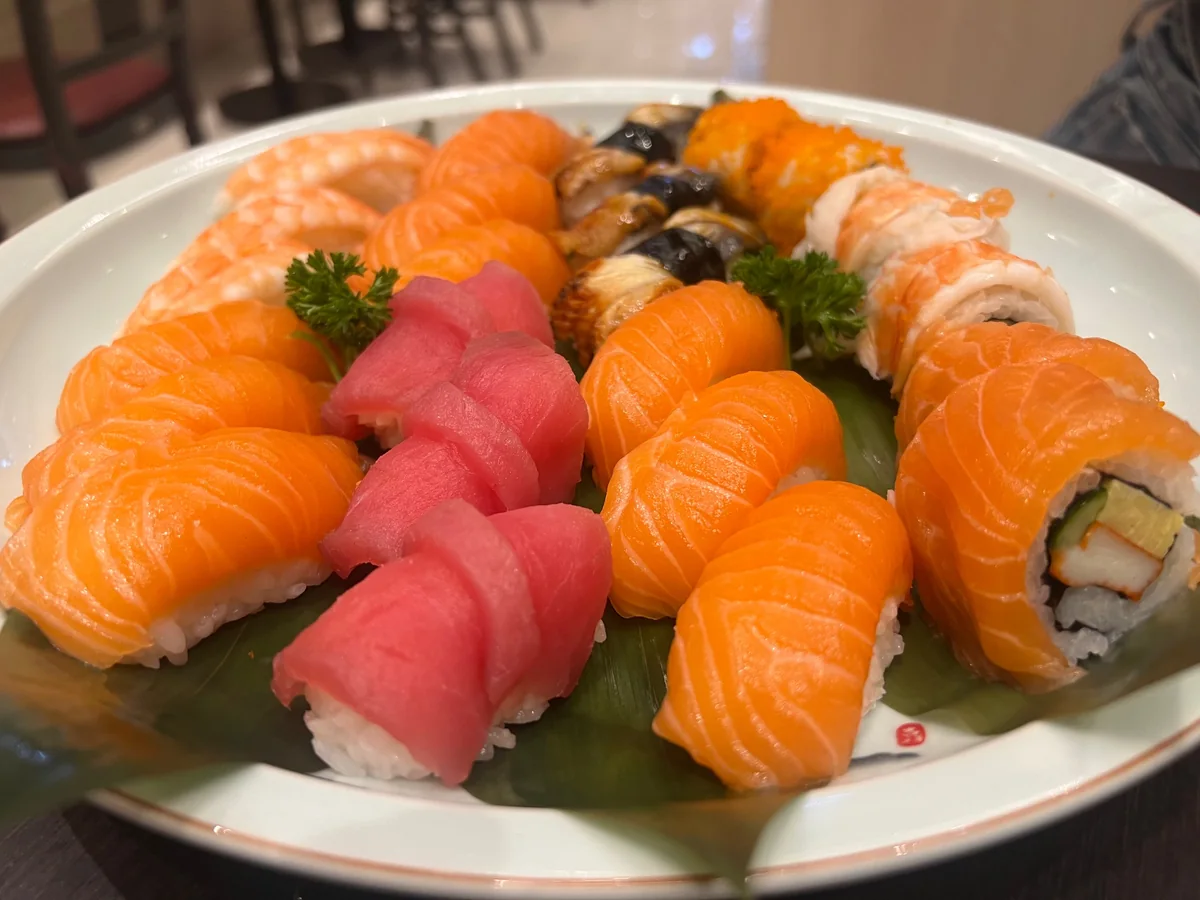
Here is a pattern I have watched play out for a decade. A client decides to get serious, buys a digital food scale, and for about nine days weighs everything: the chicken raw, the rice cooked, the olive oil to the gram. The tracking is beautiful. Then a Tuesday happens — a work dinner, a plate someone else cooked, a meal in a restaurant where he cannot exactly walk into the kitchen with a scale — and the log has a hole in it. The next day has two holes. By the following week the app is uninstalled and the whole thing is written off as "I tried tracking, it is not for me."
The scale was never the problem. The problem is that weighing food is a system with zero tolerance for real life, and real life is roughly a third of your meals. Precision that only works at home is not precision, it is a hobby you abandon.
What actually works is a lower-resolution method you can run anywhere, on any plate, without equipment, forever. You give up some accuracy on any single meal and you get back something worth far more: an estimate for every meal, including the ones you would otherwise not have logged at all. Below is the method I teach clients, how to calibrate it so it is honest rather than wishful, and what to do with the meals that genuinely defeat estimation — where the Meal Lens earns its place.
Photograph A Plate, Get The Macros — Free →Why weighing everything quits on you
A food scale is a great teaching tool and a terrible daily habit. It requires you to be at home, to have raw ingredients rather than a finished plate, and to intercept the food before anyone serves it. Break any one of those conditions and the method has no answer for you.
Worse, it trains the wrong skill. Four weeks of weighing teaches you to operate a scale. It does not teach you to look at a plate of pad thai and know roughly what you are dealing with. That second skill is the one that decides whether you are still in control of your intake in five years, and it only develops if you practise estimating.
There is also an honesty problem that the scale hides rather than solves. Self-reported food intake is consistently lower than actual intake — it is one of the most replicated findings in nutrition research, and it is not because people lie. It is because the untracked things do not feel like food: the oil the pan was cooked in, the handful off your kid's plate, the second beer, the "taste" while cooking. A scale gives you a precise number for the meals you logged and tells you nothing about the ones you did not. An estimate you apply to everything beats a measurement you apply to some of it.
The hand-portion method
Your hand travels with you, scales with your body size, and needs no batteries. Four references cover the entire job:
- Palm = one protein serving. A portion of meat, fish, tofu or eggs about the size and thickness of your palm, fingers excluded. Call it roughly 20-30g of protein.
- Cupped hand = one carbohydrate serving. Cooked rice, pasta, potato, oats, bread. Roughly 20-25g of carbohydrate per cupped handful.
- Thumb = one fat serving. Oil, butter, nut butter, cheese, nuts. Roughly 7-12g of fat per thumb-sized amount. This is the one everybody under-counts, because fat is usually invisible — it is in the pan, the dressing, the sauce.
- Fist = one vegetable serving. Any non-starchy vegetable, about a cupped-fist volume. Macros barely matter here; the volume is what makes the meal filling.
These are approximations, not laws of physics, and they are deliberately coarse. A dense chicken breast and a flaky white fish that both cover your palm are not identical — but they are close enough that the error is a few grams, not a few hundred calories.
How many hands per day?
A sane starting structure for most people, spread over three or four meals:
- Men: 2 palms of protein, 2 cupped hands of carbs, 2 thumbs of fat and 2 fists of vegetables per meal.
- Women: 1 palm, 1 cupped hand, 1 thumb and 1 fist per meal.
- Adjust the carbs and fats, never the protein. Hard training day, more cupped hands. Desk day, fewer. Protein stays where it is — that is the slot doing the work of holding onto muscle while you lose fat.
Do not take those as your numbers. Run your actual targets through the free macro calculator first, then convert them into hands: divide your daily protein target by 25 to get palms, your carb target by 22 to get cupped hands, your fat target by 10 to get thumbs. Now you have a day you can execute in a restaurant, at a friend's house, or in an airport, without opening an app.
Calibrate once, then stop measuring
Here is the part people skip, and it is the part that separates estimating from guessing. Spend one week — not forever, one week — checking yourself against reality on the five or six foods you eat most.
Serve your normal portion of rice by eye, then put it on the scale and look at the number. Do the same with your usual chicken portion, your oats, your peanut butter, your olive oil pour. You are not tracking. You are recalibrating your eye, and the results are usually humbling: most people are close on protein, low on their oil estimate, and dramatically low on their "one spoon" of peanut butter.
After that week you can put the scale in a drawer. Recalibrate for a few days if your weight stalls for two or three weeks, or when you start eating in a new country where the staple portions are different. That is the whole maintenance cost.
The meals you genuinely cannot estimate
Some plates defeat hand portions honestly. A curry where the fat is dissolved into the sauce. A restaurant dish assembled by someone else. Street food you have never eaten before. In those cases you are not estimating a portion, you are guessing at a recipe, and your guess will be low — it is almost always the fat that hides.
That is the gap the Meal Lens covers: take one photo of the plate in front of you and it names what it sees and returns a calorie and macro estimate for it. It is free, it needs no signup, and the photo is analyzed then discarded rather than stored. For an unfamiliar restaurant plate it is a far better starting point than a number you invented.
Two honest caveats, because overselling a tool helps nobody. It is reading a photograph, so it cannot see the three tablespoons of oil already absorbed into the dish or tell chicken thigh from breast with certainty — the estimate is directional, not laboratory-grade. And it estimates the plate, not your day. Whether that plate fits depends on targets it knows nothing about, which is what the macro calculator is for.
Try Meal Lens Free →How accurate does this actually need to be?
Less accurate than you think, and more consistent than you are currently managing. Body composition responds to the average of a few hundred meals, not to any single one. An estimate that is ten per cent off but applied to every meal, every day, for a year will beat gram-perfect logging that collapses after three weeks — and it is not close.
What matters far more than precision is that your method is unbiased and repeatable. If your estimates are consistently a little low across the board, that is fine, because you have a feedback loop: the scale in the bathroom and the tape measure tell you whether the average was right, and you adjust the portions rather than the arithmetic. If the weight is not moving after two or three weeks of consistent eating, remove a cupped hand of carbs or a thumb of fat and watch what happens. That loop works perfectly well on approximate inputs. What it cannot survive is a log with holes in it.
The bottom line
Get your targets from the macro calculator, convert them into palms, cupped hands and thumbs, and calibrate your eye against a scale for one week so the estimates are honest. Then run that system everywhere — at home, at dinner, on the road. When a plate genuinely beats you, photograph it instead of skipping it. The goal was never a perfect number. It was never having a day you could not track.
Want this built for you, around your schedule and your body? That’s exactly what my online coaching is — a custom plan with weekly check-ins by call or video. See real client results or explore coaching.
This article is general fitness education, not medical advice. Consult your physician before starting any new exercise or nutrition program.
FAQ
Can you count macros without a food scale?
Yes, and most people who stay lean long-term end up doing exactly that. Use hand portions as your unit: a palm of protein is roughly 20-30g of protein, a cupped hand of carbohydrate is roughly 20-25g, and a thumb of fat is roughly 7-12g. Calibrate those references against a scale for one week so your estimates are honest, then work from your hands from then on.
How accurate is the hand-portion method?
Accurate enough to work, and that is the point. Expect to be within roughly ten per cent on a typical home-cooked meal, with the biggest errors on added fats and on restaurant dishes where the oil is hidden in the sauce. That level of error is easily absorbed by adjusting portions when the scale or the tape stops moving — far better than precise tracking you abandon after three weeks.
How do I track macros when eating out?
Estimate the protein by palms first, since it is usually the most visible component, then assume the fat is higher than it looks — restaurant food is cooked with more oil and butter than home food. For an unfamiliar dish, photograph the plate with the free Meal Lens instead of guessing; it names the food and returns a directional calorie and macro estimate with no signup required.
How much protein should I eat per day?
For most active adults, roughly 1.6 to 2.2 grams per kilogram of bodyweight per day is a sensible working range, and it becomes more important, not less, when you are losing fat or training past 40. Run your own numbers with the free macro calculator, then convert the protein target into palms so you can hit it without an app.
Free tools: 1RM calculator · macro calculator · body-fat calculator
■ Free — no card, no catch
Want A Head Start?
Grab the free 5-Day Workout & Meal Plan Sampler — five real training days, a full meal plan, and a grocery list. The same style of programming my clients run.
Get The Free Guide