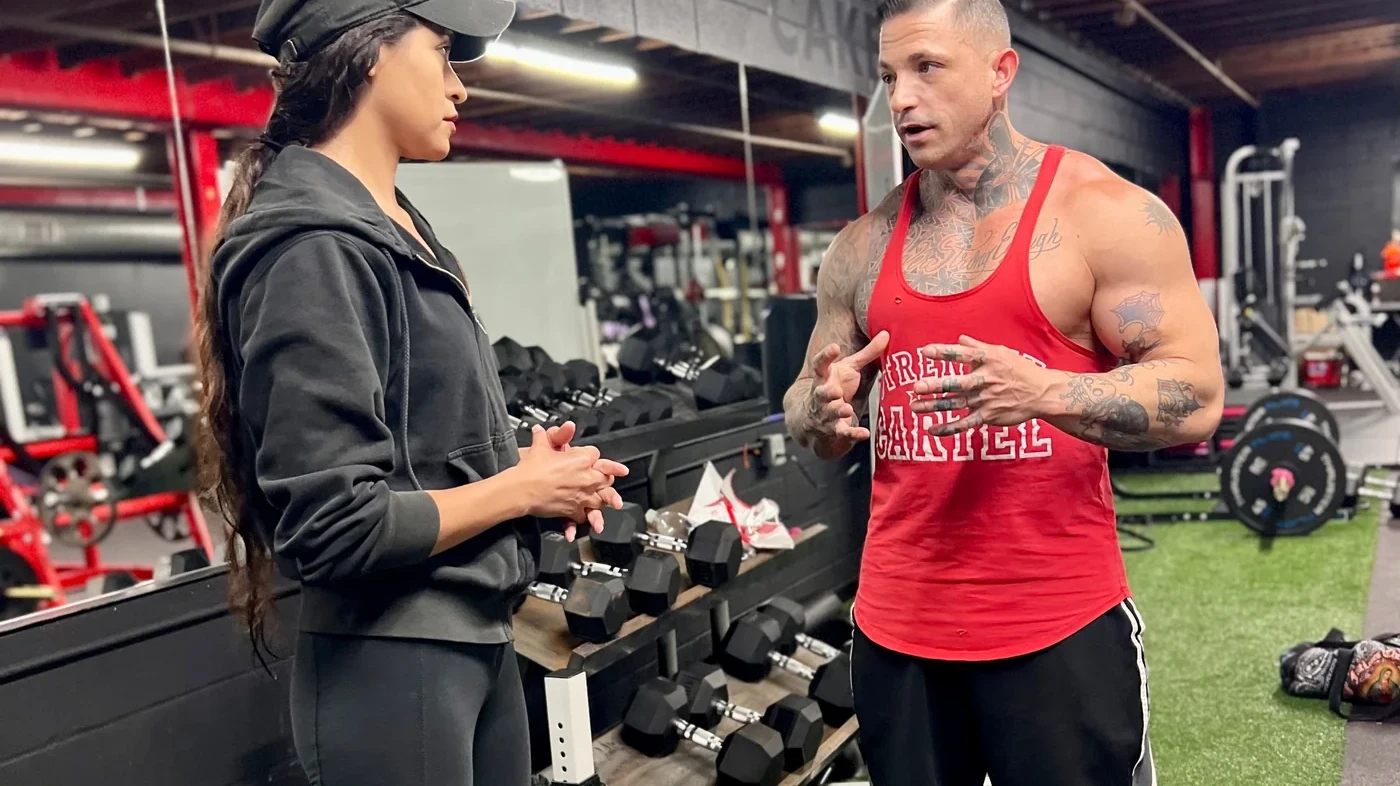
“How much does a coach cost” is a harder question to answer honestly than most of the industry lets on, because “coach” gets used for three completely different products at three completely different price points. I’ve built and sold all three tiers myself, so I’m going to tell you exactly what you get at each one — including where mine sits and why.
The three price tiers of "getting a coach"
1. Fitness apps: $0–$30/month
Apps like generic workout trackers and AI-plan generators are cheap because a piece of software, not a person, is doing the work. You get a pre-built or algorithm-generated program, a way to log sets and reps, and maybe some canned form videos. There’s no human looking at your actual lifts, your actual schedule conflicts, or your actual plate of food. That’s fine for someone who already knows how to train and just wants a tracker. It’s not coaching — it’s a very good digital notebook.
2. Template plans / PDFs: $50–$300 one-time
A step up: a real coach built the program, but they built it once, for everyone, and sold it a thousand times. You’re paying for their expertise baked into a static document, not their attention. There’s no check-in, no adjustment when your shoulder starts barking in week three, no accountability if you skip a week. Good templates from good coaches can genuinely work — but only if you’re disciplined enough to self-correct without anyone watching.
3. Real online coaching: $150–$500+/month
This is a person, not a product. A real coach builds your program around your actual body, your actual injuries, your actual schedule — and then adjusts it every week based on what happened. You get check-ins, form review, programming changes when something isn’t working, and someone who notices when you go quiet. The price reflects a human being spending real hours on one client, not spreading the same PDF across ten thousand buyers.
What you're actually paying for at each tier
The jump in price between these tiers isn’t marketing — it’s a jump in what’s actually being delivered:
- Apps buy you structure and logging. Zero human judgment.
- Templates buy you a smart starting point. Zero adjustment.
- Real coaching buys you a professional making decisions about your training every single week, and someone accountable if it isn’t working.
If you already know how to train, eat, and self-correct, an app or a template can absolutely be enough. If you’ve tried those and stalled out, plateaued, or quietly stopped logging in by week four — the thing you were missing wasn’t information. It was a person adjusting the plan and checking on you.
My own pricing, laid out honestly
I don’t hide behind a “book a call to see pricing” funnel, because I think that trick exists to soften sticker shock, not to serve the client. Here’s what BodieZ By J actually costs, and what’s included at every tier:
- Bronze — Kickstart, 1 month: $400 ($400/mo). Custom training and nutrition, a weekly check-in by call or video, app-based programming and tracking, and 24/7 messaging with me directly.
- Silver — Momentum, 3 months: $1,100 (~$367/mo). Everything in Bronze, plus deeper program progression, priority support, and a real habit-and-accountability system, not just a workout list.
- Gold — Transformation, 6 months: $2,000 (~$333/mo). Everything in Silver, with a full transformation runway, the fastest response times, and the deepest tracking and review.
The per-month cost drops as the commitment lengthens, on purpose. Coaching works because of consistency, and a 1-month plan almost never covers a real body-composition or strength shift — it covers a good first month. Six months covers an actual transformation. I’d rather price it honestly than sell you a short plan I know won’t get you where you want to go.
How to know which tier is right for you
Ask yourself three questions before you spend anything:
- Have I ever stuck to a program for 12+ weeks on my own? If yes, and it worked, a template might be all you need. If no, that’s the exact gap a coach closes.
- Am I training around an injury, a demanding job, or a body that hasn’t responded to generic plans? That’s a real coach’s job, not an algorithm’s.
- Do I actually need someone to notice if I disappear for two weeks? Be honest. Most people do, and that’s not a weakness — it’s just how accountability works.
Red flags that mean you're overpaying — or underpaying
Watch for coaches charging real-coaching prices ($300+/month) for what’s actually an app subscription with an automated check-in message — you’re paying for a human and getting a bot. On the flip side, be skeptical of “coaches” selling 1-on-1 programming for $50/month; at that price they either have hundreds of clients and can’t actually be paying attention to yours, or the “coaching” is a template with your name pasted on top.
The bottom line
An app costs the least because it does the least. A template costs more because a real coach’s expertise went into it once. Real coaching costs the most because a real coach is spending real hours on your specific body, every single week. None of the three is a scam — they’re just different products wearing the same word. Know which one you’re actually buying before you pay for it, and pick the one that matches what you’ve actually been missing.
Want this built for you, around your schedule and your body? That’s exactly what my BodieZ By J coaching plans is — a custom plan with weekly check-ins by call or video. See real client results or explore coaching.
This article is general fitness education, not medical advice. Consult your physician before starting any new exercise or nutrition program.
FAQ
How much should I expect to pay for an online fitness coach?
Real 1-on-1 online coaching with weekly check-ins and personalized adjustments typically runs $150–$500+ per month, depending on how much direct access and program depth is included. Cheaper options usually mean less human attention — an app subscription or a static template rather than an actual coach.
Is a cheap fitness app the same as hiring a coach?
No. Apps and AI-generated plans give you structure and logging, but no human is reviewing your form, adjusting your program when something isn’t working, or checking in if you go quiet. That’s the core difference between a $20/month app and a $300+/month coach.
Are template workout PDFs worth buying?
They can be, if you already know how to self-correct and stay consistent without outside accountability. A template gives you a smart starting program built by a real coach, but it never adjusts to your progress or checks in on you — you’re on your own after the purchase.
Why do coaching prices drop per month on longer plans?
Real body-composition and strength changes take months, not weeks, so longer commitments reflect the timeline that actually produces results. Coaches often price longer plans at a lower monthly rate because they’d rather see a client commit to the runway that works than buy a short plan likely to fall short.
Free tools: 1RM calculator · macro calculator · body-fat calculator
■ Free — no card, no catch
Want A Head Start?
Grab the free 5-Day Workout & Meal Plan Sampler — five real training days, a full meal plan, and a grocery list. The same style of programming my clients run.
Get The Free Guide